AI prompt collaboration tools guide for better teamwork
"The real value of this tool is that it will really save people time and make the impossible possible."
This guide explores strategic implementation, technical requirements, and risk management for collaborative prompt engineering.
Key takeaways: 1. Aligning teams through shared prompt frameworks. * Managing the high computing demands of agentic systems. * Addressing systemic risks in automated environments.
How can we use AI prompt collaboration tools for better teamwork?
At the office desk, she taps the keyboard as the flickering screen displays a shared prompt template.
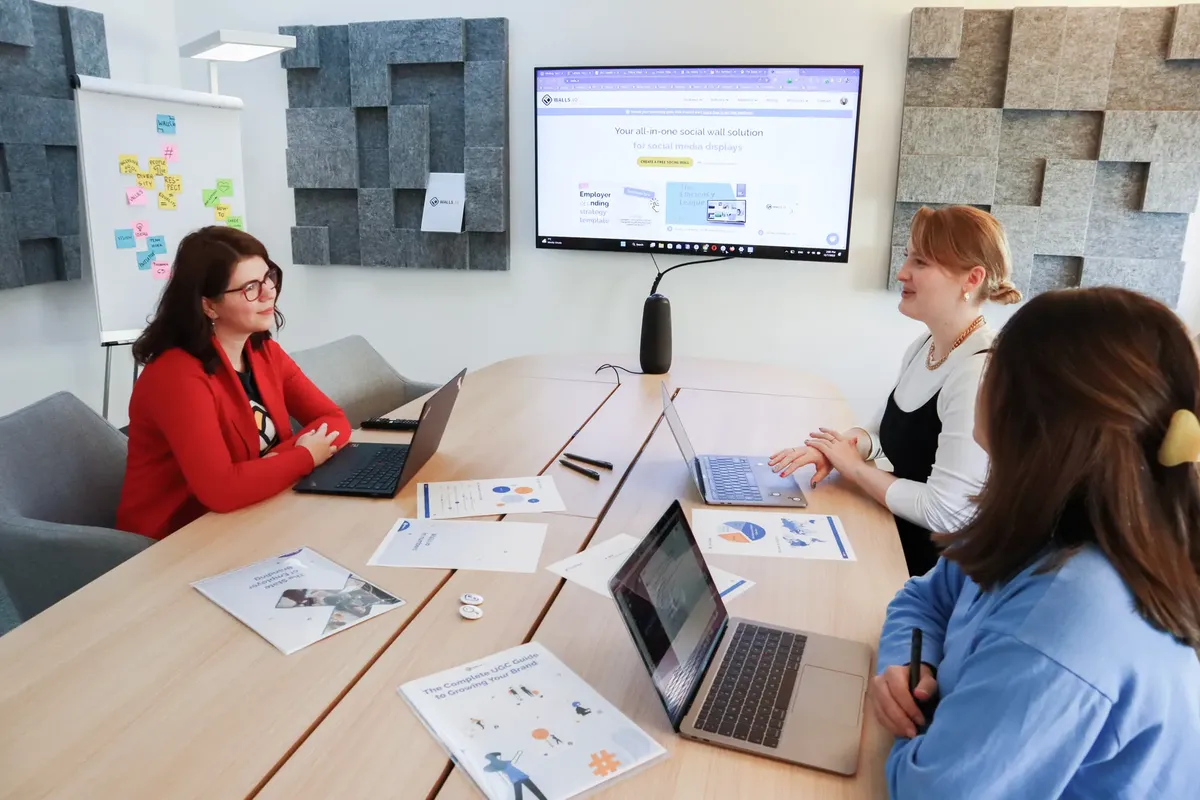
Utilizing an AI prompt collaboration tools strategy helps teams transition from individual experimentation to standardized, scalable workflows.
This prevents the fragmentation of results and allows for a unified output that reflects the collective intelligence of the group.
Using prompt tools effectively means moving beyond simple chat interfaces into structured environments where variables can be shared and refined.
The Linux Foundation announced the formation of the Agentic AI Foundation (AAIF) in December 2025 to ensure that agentic AI evolves transparently and collaboratively. This move highlights the necessity of collaborative frameworks to manage increasingly complex AI interactions.
However, the effectiveness of these tools is limited if team members lack a shared understanding of the underlying AI models.
What do I need technically to build a prompt strategy?
An engineer monitors a server rack, noting the massive energy consumption required to run a new fleet of autonomous agents. A robust prompt tool strategy must account for the significant hardware infrastructure needed to support advanced agentic behaviors.
The computational load for these systems is substantial. According to Nvidia CEO Jensen Huang, AI agents would require 100 times more computing power than LLMs.
This massive requirement means that teams must optimize their prompts to be efficient, reducing unnecessary token usage and computational waste.
A well-designed prompt tool strategy ensures that the hardware can handle the operational load of multiple agents working in parallel. Without such planning, the transition from single-user prompts to team-wide automation could lead to significant bottlenecks.

However, these requirements may vary depending on the specific API constraints and integration capabilities of the chosen platform.
Can I define context in complex environments using tools?
A researcher adjusts a digital dashboard, fine-tuning the context window to prevent the AI from losing track of specific project constraints. To define context with prompt tools, users must build structured frameworks that provide the AI with necessary background data and role-specific constraints.
Effective context management involves creating multi-layered prompts that include persona, task, constraints, and output formats. This structured approach allows different team members to plug into a single "source of truth" for the AI's identity and objective.
| Requirement | Scale Factor |
|---|---|
| LLM Baseline | 1x |
| AI Agent Demand | 100x |
I found that adjusting the context depth significantly changed how the agent responded to team queries.
However, defining context becomes significantly more difficult when dealing with highly fragmented or contradictory data sources.
What are the benefits of using prompt tools for productivity?
A manager watches as an automated workflow completes a week's worth of data processing in minutes, freeing up the team for creative tasks. The benefits of using prompt tools often manifest as a dramatic increase in operational speed and the ability to handle tasks previously deemed too complex.
According to the National Science Foundation, the real value of this tool is that it will really save people time and make the impossible possible.
When teams use collaborative prompt frameworks, they can automate repetitive reasoning tasks, not just simple text generation. This allows for the deployment of agentic systems that can act on behalf of the team to complete end-to-end processes.
The real value of this tool is that it will really save people time and make the impossible possible. This sentiment reflects the potential for prompt-driven automation to transform traditional work cycles.

However, the productivity gains may be offset if the time spent refining prompts exceeds the time saved in task execution.
How do we manage risks in AI prompt teamwork?
A financial analyst reviews an error log, investigating why an autonomous agent produced an unexpected result during a market simulation. During AI prompt teamwork, managing the risks associated with autonomy and decision-making is critical to maintaining system integrity.
As systems become more autonomous, the potential for error or unintended consequences increases. Teams must implement rigorous testing protocols and human-in-the-loop checkpoints to validate agent outputs.
In one 2025 forum, 44% of experts surveyed judged autonomous or agentic AI systems to be the most likely current source of AI‑related systemic risk in finance. This statistic underscores the importance of proactive risk management when deploying collaborative AI agents in high-stakes sectors.
However, risk management efforts may be insufficient if there is no clear accountability for the outputs generated by collaborative prompts.
What is the process for implementing these tools?
A consultant walks through a training session, demonstrating how to input variables into a master prompt template. Implementing a new system requires a structured approach to ensure adoption and reliability.
- Establish a centralized prompt library that serves as the single source of truth for the team. 2. Define clear roles and permission levels to control how different users interact with the agentic workflows. 3. Implement a continuous feedback loop where team members can refine and version-control prompt iterations.
A final check involves testing the updated prompt against historical data to ensure the output meets the established standards.

- Assess the current workflow to identify integration points. 2. Select and configure the appropriate prompt collaboration tools. 3. Train the team on standardized prompting protocols.
- Effective AI prompt collaboration tools allow teams to synchronize complex instructions and manage autonomous workflows to drive productivity.
- A team lead sits at a desk, adjusting the parameters of a shared prompt template to ensure consistency across multiple departments.
- By establishing a central repository for prompt templates, organizations can ensure that every team member uses the same logic and context.
The same subject is also called Collaborative AI prompts.
This part also covers Boost decision making with AI.
This part also covers Real benefits of prompt use.
Related







Comments 0